
In the digital age, the voice of the customer has become the most powerful marketing asset a business can own. Before making a purchase, booking a service, or signing up for a subscription, modern consumers instinctively reach for their smartphones to see what others have to say. Online reviews have transformed from a nice-to-have social proof into an absolute necessity for survival and growth.
Research consistently shows that nearly 95% of shoppers read online reviews before making a purchase, and products with positive reviews are 270% more likely to be bought than those without. For online businesses, where there is no physical storefront to build trust, reviews serve as the digital handshake that reassures potential customers.
However, not all review platforms are created equal. Choosing the right platform for your specific business model—whether you run an eCommerce store, a SaaS company, or a local service—can mean the difference between a thriving reputation and a stagnant sales funnel. This article will explore the best review platforms available today, how to leverage them for trust and sales, and the strategies needed to manage your online reputation effectively.
Understanding the strategic value of review platforms is the first step to using them effectively. Their impact extends far beyond simple star ratings.
Build Trust and Credibility
Trust is the currency of the internet. A prospective customer landing on your website for the first time has no reason to believe your marketing claims. However, a collection of authentic, positive reviews from real users acts as third-party validation. It signals that your business delivers on its promises. According to a BrightLocal study, 79% of consumers trust online reviews as much as personal recommendations from friends or family.
Improve SEO Rankings
Search engines, particularly Google, prioritize businesses that demonstrate authority and relevance. Reviews contribute to both. Fresh, user-generated content (keywords in reviews) helps your site rank for long-tail search terms. Furthermore, review signals—such as the total volume of reviews, velocity of new reviews, and sentiment—are direct ranking factors in local SEO. A steady stream of positive reviews can push your Google Business Profile to the top of the “Local Pack” (the top 3 local business results).
Increase Conversions and Sales
Reviews act as a silent salesforce. Products with reviews convert at a significantly higher rate than those without. For eCommerce sites, displaying reviews can increase conversion rates by up to 270%. For B2B SaaS, a detailed case study or a high G2 score can shorten the sales cycle by providing the social proof needed for a procurement team to say “yes.”
Provide Customer Insights and Feedback
Negative reviews, while painful, are free consulting. They highlight friction points in your product or service that you may have overlooked. Patterns in feedback—such as complaints about shipping speed, software bugs, or customer service responsiveness—give you a direct line to operational improvements. Listening to review data allows you to build a better business.
Before diving into specific sites, it is helpful to establish a rubric for evaluation. When selecting a review platform, consider these five pillars:
Here is a detailed breakdown of the top platforms, categorized by their ideal use case.
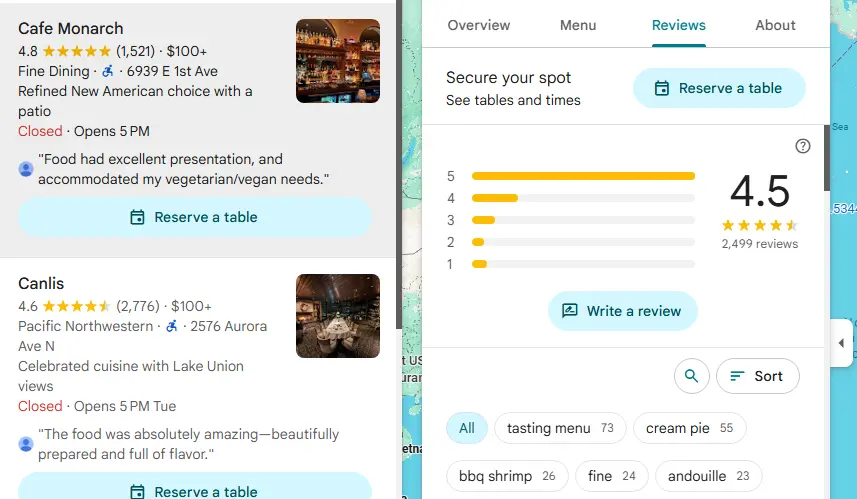
Google Reviews is the undisputed king of local SEO. Because Google handles over 90% of search queries, your Google Business Profile (GBP) is often the first thing a customer sees when searching for your brand.
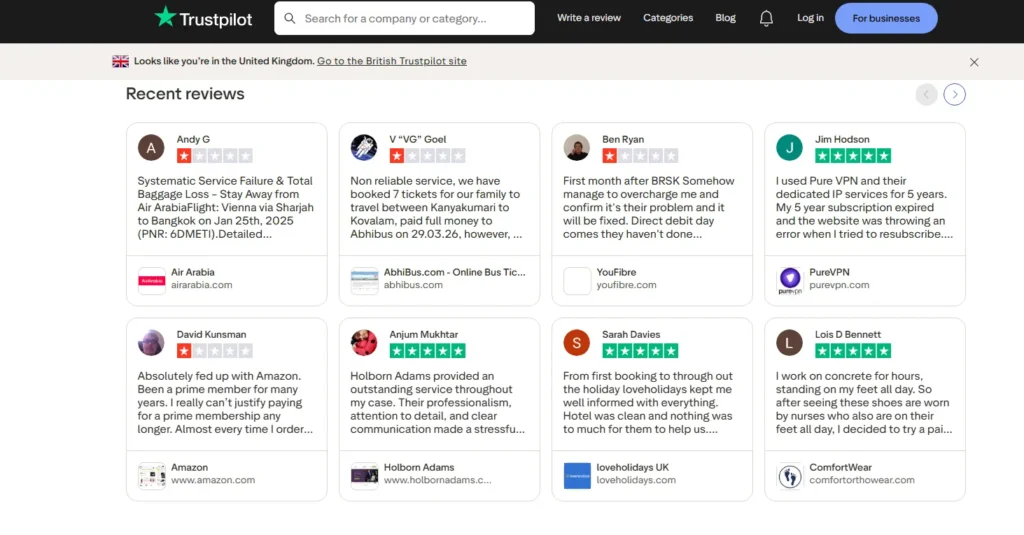
Trustpilot is a global powerhouse built for transparency. It is one of the few platforms that allows any customer—not just verified buyers—to leave a review, though it does offer a “verified purchase” badge.
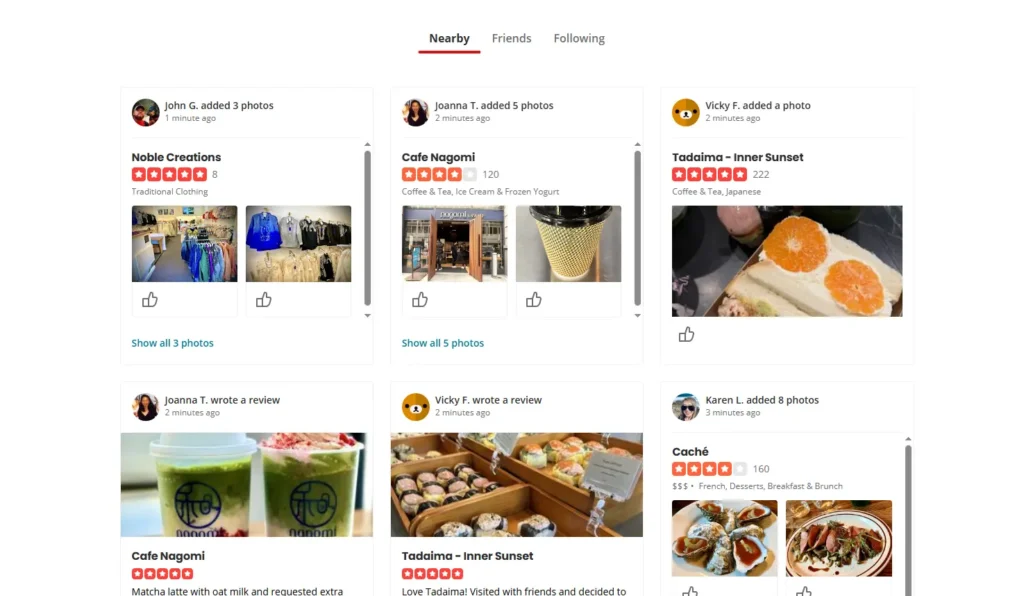
Yelp has a controversial reputation among business owners due to its aggressive advertising sales and filter algorithm, but for service-based businesses, it remains essential.
With billions of monthly active users, Facebook Reviews (now integrated into Facebook Recommendations) offers massive social exposure.
If you sell physical products, Amazon reviews are the single most important conversion factor on the planet.
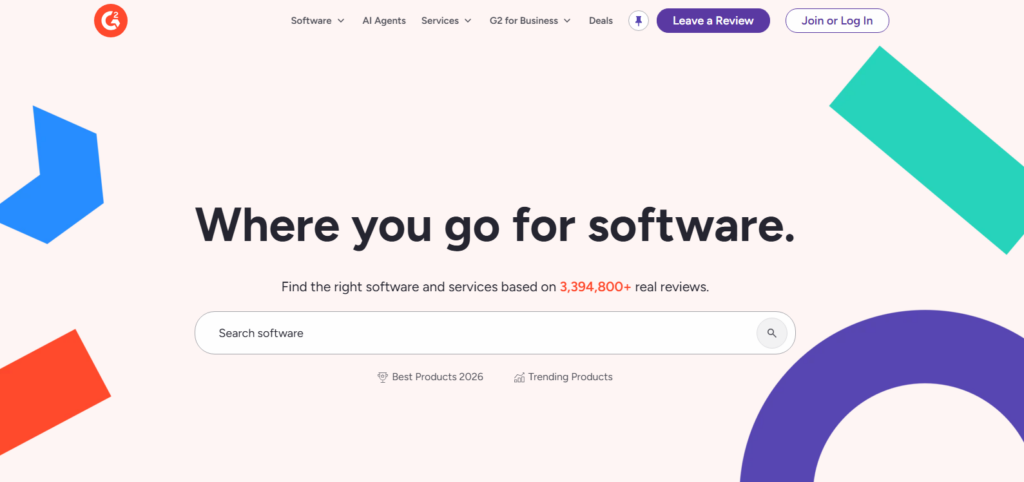
G2 is the leading peer-to-peer review platform for business software and services. It has largely disrupted older models like Capterra (though both are now owned by the same parent company).
Capterra is a giant in software discovery, known for generating high-volume leads through comparison shopping.
The BBB is the oldest trust organization on this list. While Millennials may ignore it, Baby Boomers and Gen X trust it implicitly.
| Platform | Best For | Pricing | Key Feature | Ideal Business Size |
|---|---|---|---|---|
| Local SEO | Free | Maps integration & Local Pack ranking | All sizes | |
| Trustpilot | Global eCommerce | Freemium ($200+/mo paid) | Verified purchase badges & SEO snippets | Mid-market to Enterprise |
| Yelp | Restaurants/Services | Free (Ads cost extra) | Elite user community | Small to Medium |
| B2C Social proof | Free | Viral social sharing | Small to Medium | |
| Amazon | Physical products | Included in Seller account | Direct impact on Buy Box | eCommerce Sellers |
| G2 | B2B SaaS | Freemium (Lead gen costs) | Competitor grid reports | Tech & B2B |
| Capterra | Software leads | Pay-per-lead | High-intent phone calls | B2B |
| BBB | Trust/Accreditation | Accreditation fee (~$500+/yr) | Dispute resolution | Local service & Finance |
Selecting a platform is not about being everywhere; it is about being where your customers are.
Based on Industry:
Target Audience Considerations:
Budget and Growth Goals:
Startups should focus on free platforms (Google, Facebook). Growth-stage companies should invest in Trustpilot or G2 to gain SEO authority. Enterprises need a full reputation management suite covering all major platforms.
Having a profile is useless without reviews. You must actively solicit them.
Ask at the right time. The best time to ask for a review is immediately after a positive interaction—right after a customer support call ends, when a package is delivered, or when a user hits a “milestone” in your software.
Use email and SMS campaigns. Automate review requests. For eCommerce, send an email 5-7 days after delivery. For restaurants, send an SMS 10 minutes after the customer pays the bill.
Offer incentives (ethically). You cannot pay for a positive review, but you can enter reviewers into a lottery for a gift card regardless of their star rating. Amazon strictly prohibits “discounts for reviews,” but many platforms allow sweepstakes.
Make it easy with direct links. Never say “Review us on Google.” Send a direct, shortened link: g.page/r/Cb... that takes them directly to the review pop-up. Every extra click loses 50% of your potential reviewers.
Collecting reviews is only half the battle; managing them builds brand loyalty.
Handling negative reviews professionally. Do not get defensive. Do not argue. Follow the “3 A’s”: Apologize (for their experience), Acknowledge (their specific issue), and Act (offer a solution or ask them to contact you privately). A well-handled 1-star review often impresses future customers more than a 5-star review, because it shows you care.
Encouraging positive engagement. Always thank reviewers for their feedback. A simple “Thanks for the 5 stars, John! Glad you loved the service!” takes 5 seconds and makes the customer feel valued. It also shows future customers that you are active.
Building brand loyalty. When customers see you respond thoughtfully, they are more likely to become repeat buyers and brand advocates. Use the insights from negative reviews to update your FAQ page or change your shipping policy.
Ignoring reviews entirely. The worst review is no review. A blank profile looks like a ghost business. Similarly, failing to respond to reviews signals that you don’t care about customers.
Posting fake reviews. Do not do this. Amazon, Google, and Yelp have sophisticated AI to detect fake accounts, IP spoofing, and language patterns. Getting caught results in permanent bans and public shaming.
Not responding to feedback. Even a templated “Thanks!” is better than silence. A lack of response to a negative review amplifies the damage, as it appears you agree with the complaint.
Using too many platforms without strategy. Spreading your review collection efforts across 15 platforms will result in mediocre scores everywhere. Focus on 2-3 platforms where your audience lives and dominate those. It is better to have 500 Google reviews and 500 Trustpilot reviews than 50 reviews across 10 different sites.
Online reviews are the digital foundation of trust in the modern economy. For online businesses, they serve a dual purpose: they provide the social proof necessary to convert hesitant shoppers, and they feed the search engine algorithms that bring new customers to your door.
The best platform for your business depends entirely on your industry. Google Reviews remains the universal baseline for every business due to its SEO power. Trustpilot is the gold standard for global consumer brands. G2 and Capterra are non-negotiable for B2B software companies, while Amazon owns the product review space.
However, the platform itself is just a tool. The real work lies in consistent management: actively asking for reviews, responding to every piece of feedback with grace, and using the data to improve your operations. Avoid the temptation to buy fake reviews or ignore the negative ones. Authenticity, even when imperfect, always wins in the long run.