
Online reviews have evolved from a simple convenience into a cornerstone of business success. A staggering 93% of consumers say online reviews influence their purchasing decisions, and nearly 80% trust online reviews as much as personal recommendations. However, the impact of reviews extends far beyond consumer trust. Search engines, particularly Google, have become increasingly sophisticated in how they interpret user-generated content. Reviews now directly influence Search Engine Optimization (SEO) rankings, affecting whether a business appears on page one or page ten of search results.
Yet, not all review platforms are created equal. While collecting reviews across dozens of sites might seem like a sound strategy, spreading efforts too thin can dilute results. Some platforms carry significant “domain authority,” while others are largely ignored by search engine algorithms. Understanding this distinction is critical. This article explores which review platforms deliver the most tangible SEO value, how they interact with search algorithms, and how businesses can strategically leverage them to improve online visibility, drive organic traffic, and build lasting digital credibility.
Search Engine Optimization (SEO) is the practice of increasing the quantity and quality of traffic to a website through organic search engine results. It involves optimizing technical elements, content, and off-site signals (like backlinks) to help search engines understand that a site is authoritative, relevant, and useful. Reviews intersect with SEO in several powerful ways.
First, reviews generate fresh, user-generated content. Search engines prioritize websites that are updated regularly with relevant information. Each time a customer leaves a review, they add new text to a business’s online footprint—often including keywords like “plumber in Austin” or “best vegan pizza.” This naturally occurring keyword density signals relevance to search engines without any forced optimization.
Second, reviews enhance local SEO dramatically. When Google evaluates local search results (e.g., “coffee shop near me”), it analyzes three core factors: proximity, prominence, and relevance. Reviews directly impact prominence. A business with 500 positive, detailed reviews will almost always outrank a competitor with 10 reviews, even if the latter is geographically closer. Google interprets a high volume of quality reviews as a sign of trustworthiness and popularity.
Third, reviews contribute to click-through rates (CTR) from search results. When a business listing displays star ratings in rich snippets—those small gold stars next to a URL—users are far more likely to click. Higher CTR signals to Google that the result is useful, creating a positive feedback loop that improves rankings.
Finally, there is the concept of social proof. Google’s algorithms, particularly the RankBrain component, observe how users interact with search results. If users consistently click on a listing with excellent reviews and spend time on that site (low bounce rate), Google infers that the result is valuable. In essence, reviews act as a continuous, public vote of confidence that search engines monitor closely.
Before evaluating specific platforms, it is essential to understand what makes a review site SEO-friendly. Not every platform passes the same “link juice” or authority to a business. Here are the five critical features to look for.
Quality of Reviews: Search engines are increasingly adept at detecting spam, fake, or low-effort reviews. Platforms that enforce authenticity—through verified purchase badges, moderation systems, or user history requirements—produce reviews that carry more weight. A single detailed, 200-word review mentioning specific services is worth more than ten “Great job!” one-liners.
Frequency of Reviews: Google’s algorithm favors freshness. A business that receives reviews weekly signals ongoing activity and customer satisfaction. Stale review profiles (no new reviews in six months) suggest neglect. The best platforms are those where customers naturally leave feedback frequently, such as Google Maps or Yelp, rather than niche sites updated only annually.
Review Schema Markup: Schema.org structured data is code that you add to your website to help search engines return richer results. When a review platform supports schema markup—or when you implement it on your own site to aggregate reviews—Google can display star ratings directly in search snippets. This visual enhancement dramatically improves CTR. Without schema, even excellent reviews may appear as plain text.
Integration with Google My Business (GMB): For local SEO, integration is non-negotiable. Google My Business (now often called Google Business Profile) is the single most important local SEO asset. Platforms that sync with GMB or allow reviews to appear directly within Google’s local panel have a direct pipeline to search rankings. Third-party reviews that do not appear on GMB have a more indirect effect.
Mobile Friendliness and Ease of Use: Google uses mobile-first indexing, meaning it primarily evaluates the mobile version of content. Review platforms that are slow, clunky, or require desktop-only access are penalized. Moreover, if customers struggle to leave a review on their phone, they simply won’t. The best SEO platforms are frictionless on mobile devices.
Now, let us examine the specific platforms that deliver measurable SEO results, ranked roughly by overall impact.
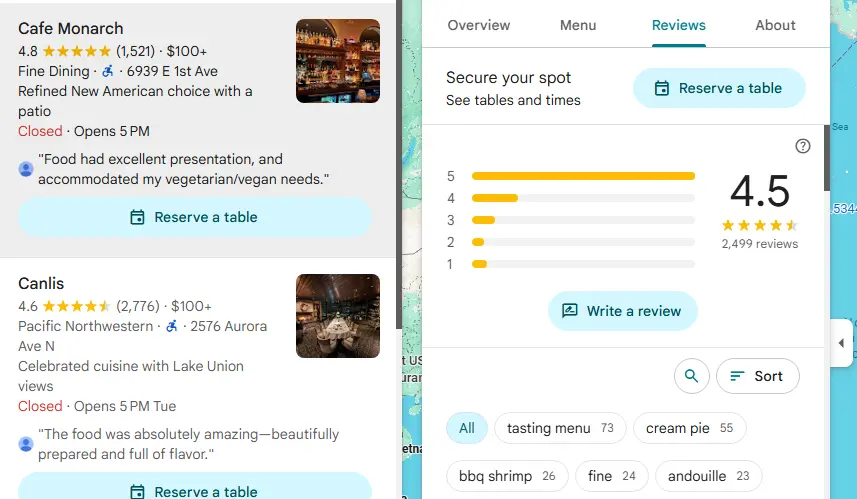
Google My Business (GMB) is the undisputed king of review-based SEO, particularly for local businesses. Reviews left on GMB appear directly in Google Maps, the local pack (the top three local results), and the knowledge panel on branded searches. Because Google owns the platform, these reviews are given preferential treatment in the algorithm. A business with a 4.8-star average from 300 GMB reviews will almost always outrank a competitor with a 4.5 from 50 reviews, assuming other factors are equal.
Moreover, responding to GMB reviews—both positive and negative—signals engagement. Google can track response rates and response speed. Businesses that actively manage their GMB profile see incremental ranking boosts. Actionable tip: Always ask customers to mention a specific service or location in their review to naturally embed long-tail keywords.
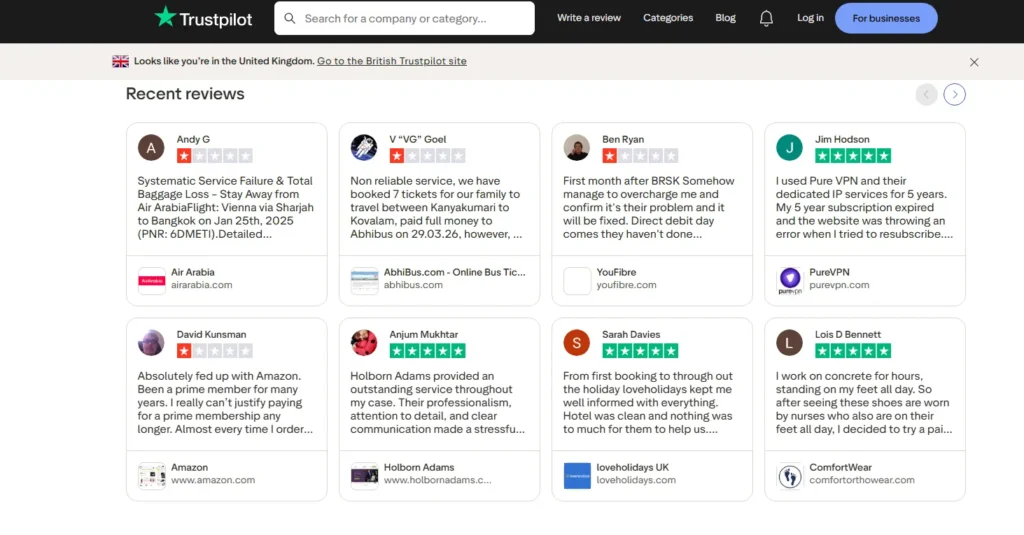
Trustpilot has emerged as a heavyweight for SEO, particularly for e-commerce, SaaS, and national brands. While it does not directly impact local pack rankings like GMB, Trustpilot has exceptionally high domain authority (DA) – often above 80/100. This means that Trustpilot review pages frequently rank on the first page of Google for branded searches (e.g., “Company X reviews”).
More importantly, Trustpilot automatically generates review snippets with schema markup, which Google often displays directly in search results. Trustpilot also allows businesses to embed review widgets on their own websites, passing some of that authority back. One downside: Trustpilot is known for inviting reviews via email, which can sometimes skew toward unhappy customers if not managed carefully. However, for SEO, its technical infrastructure is outstanding.
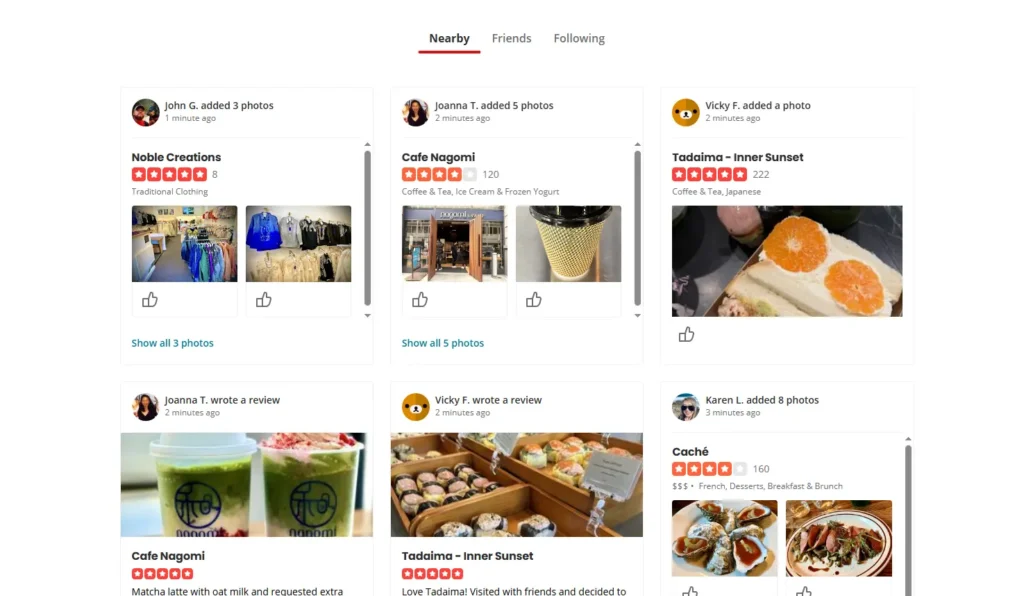
Yelp is polarizing but undeniably powerful for local SEO, especially for restaurants, home services, retail, and healthcare. Yelp’s domain authority is also extremely high, and its review pages consistently rank on page one for local searches. However, Yelp is aggressive about filtering reviews—it may hide what it considers suspicious or low-effort feedback, which can frustrate business owners.
From an SEO perspective, Yelp’s biggest strength is its longevity and trust. Google trusts Yelp as a legitimate, authoritative source. A Yelp profile with many detailed, unfiltered reviews sends strong relevance signals. Best practice: Complete your Yelp profile entirely (photos, hours, services) and encourage reviews naturally without incentivizing, as Yelp’s algorithm penalizes solicitation.
Facebook is often overlooked as a review platform, but it deserves attention. Facebook has near-universal domain authority, and its pages are consistently indexed by Google. A Facebook recommendation (Facebook’s term for a positive review) can appear in search results, especially for branded queries. Additionally, Facebook’s massive user base means that reviews left there contribute to overall “social signals”—indirect factors that may influence search rankings.
The limitation is that Facebook does not use standard review schema markup in the same way as Trustpilot or GMB. Star ratings rarely appear in search snippets from Facebook. Nevertheless, for businesses with active communities (e.g., local gyms, boutiques, B2B services), Facebook reviews add another layer of credibility and fresh content that search engines appreciate.
For the travel, hospitality, and tourism industries, TripAdvisor is non-negotiable. Hotels, restaurants, attractions, and tour operators live or die by their TripAdvisor rankings. From an SEO perspective, TripAdvisor pages for specific businesses frequently outrank the businesses’ own websites for non-branded searches (e.g., “best hotel in Chicago with pool”). This is due to TripAdvisor’s massive domain authority and the volume of fresh, keyword-rich content generated daily.
If you are in a relevant industry, accumulating TripAdvisor reviews is not optional—it is essential. Google often displays TripAdvisor ratings directly in the local pack for hotels and restaurants, sometimes even above GMB reviews.
Collecting reviews is only half the battle. To maximize SEO impact, businesses must adopt strategic best practices.
Encourage Honest, Organic Reviews: Never buy fake reviews or coerce only happy customers. Google’s spam detection is sophisticated, and fake reviews can result in ranking penalties or complete removal from Google Maps. Instead, make it easy for all customers to leave feedback via email links, QR codes on receipts, or follow-up SMS messages.
Respond to Every Review (Yes, Every One): Responding to reviews—thanking positive feedback and professionally addressing negative comments—demonstrates responsiveness. Google has explicitly stated that engagement signals (like response rate and speed) are considered in local ranking algorithms. Moreover, each response adds new, unique content to your review profile.
Maintain Consistency Across Platforms: Search engines cross-reference information. If your business name, address, and phone number (NAP) are inconsistent between Yelp, GMB, and Trustpilot, you confuse Google and hurt rankings. Use a citation management tool to ensure uniformity.
Incorporate Keywords Naturally in Review Responses: When responding to a review, you can subtly include relevant keywords. For example: “Thank you for trying our emergency plumbing services in Seattle.” Do not overdo this—authenticity remains paramount—but strategic keyword placement helps.
Implement Review Schema on Your Own Website: Even if you collect reviews on third-party platforms, you can aggregate the best ones on your own site using schema markup. Use Review, AggregateRating, and Review schema types to enable rich snippets for your product or service pages. Google’s Structured Data Testing Tool can validate your implementation.
Business owners often panic over negative reviews, fearing an SEO catastrophe. The reality is more nuanced. A single negative review will not tank your rankings, but a pattern of negative sentiment can.
Search engines do not directly penalize negative reviews (there is no “low star rating penalty”). However, negative reviews indirectly harm SEO in three ways. First, they lower click-through rates from search results—users avoid low-rated listings, which signals to Google that the result is less useful. Second, a flood of negative reviews often contains keywords like “scam,” “broken,” or “terrible service,” which can associate negative sentiment with your brand. Third, if you fail to respond, Google interprets that as neglect.
The best strategy is to address negative reviews professionally and promptly. Apologize publicly, offer to resolve the issue offline, and then—once resolved—encourage the customer to update their review. A negative review that is later revised to positive (or even neutral) is an SEO asset, demonstrating transparency and customer focus. Additionally, a high volume of positive reviews will algorithmically dilute the impact of a few negatives. Aim for a ratio of at least 10 positive reviews for every 1 negative review.
| Platform | Best For | SEO Strength | Key Limitation |
|---|---|---|---|
| Google My Business | All local businesses (retail, restaurants, services) | Extremely high – direct local pack impact | Only relevant for businesses with a physical location or service area |
| Trustpilot | E-commerce, SaaS, national brands | High – rich snippets, high DA | Less effective for local-only businesses |
| Yelp | Restaurants, home services, healthcare | High – strong domain authority | Aggressive review filtering; can hide legitimate reviews |
| B2C brands, local communities, gyms | Moderate – indexed but no rich snippets | Lower CTR from search results | |
| TripAdvisor | Hotels, restaurants, attractions, travel | Very high (for relevant industries) | Useless for businesses outside hospitality |
| G2 / Capterra | B2B SaaS, software, tech products | High – dominates branded search results | No value for consumer retail or local services |
| Angi | Contractors, home repair, electricians | Moderate to high | Limited to home services industry |
Online reviews are no longer a “nice to have” add-on for businesses—they are a direct ranking factor in modern SEO. However, a scattergun approach to collecting reviews across dozens of platforms is inefficient. The most effective strategy is to focus on the platforms that align with your business type and SEO goals.
For local businesses—from coffee shops to dental clinics—Google My Business is non-negotiable. Prioritize GMB reviews above all others, respond to every single one, and ensure your profile is complete. For national e-commerce or SaaS companies, Trustpilot and G2 will deliver superior rich snippets and branded search visibility. Restaurants and hotels must aggressively manage Yelp and TripAdvisor, while home service providers should add Angi to their mix.
Ultimately, reviews are a form of user-generated content that signals trust, freshness, and authority to search engines. By strategically encouraging authentic reviews, responding thoughtfully, and leveraging schema markup, businesses can transform customer feedback into a powerful SEO engine. In a digital landscape where trust is currency, reviews are the gold standard—and search engines have taken notice.