
Online reviews have evolved from a “nice-to-have” feature into the bedrock of modern business credibility. Before making a purchase, nearly 95% of consumers read reviews, and a staggering majority trust these testimonials as much as personal recommendations from friends.
Enter Trustpilot. As one of the world’s largest and most recognizable review platforms, Trustpilot hosts over 200 million reviews of businesses across every industry. It has become the go-to source for consumers seeking validation before clicking “buy.”
Trust is the currency of the internet. A single negative review can deter potential customers, while a collection of authentic, positive feedback can act as a powerful magnet for new business. This article explores how businesses can strategically leverage Trustpilot—not just as a rating board, but as a growth engine—to build unshakeable credibility, attract high-intent customers, and ultimately increase revenue.
Trustpilot is a Danish consumer review platform founded in 2007, designed to connect buyers and sellers through transparent feedback. Unlike a simple rating widget, Trustpilot functions as an open, democratic forum where any customer can share their experience with a business, and any business can invite feedback.
How it works: Businesses create a free profile page. Customers leave a review scoring from 1 to 5 stars, often accompanied by a written narrative. Over time, the business accumulates a “TrustScore” (averaged between 1.0 and 5.0), which becomes a shorthand signal for quality.
Key features include:
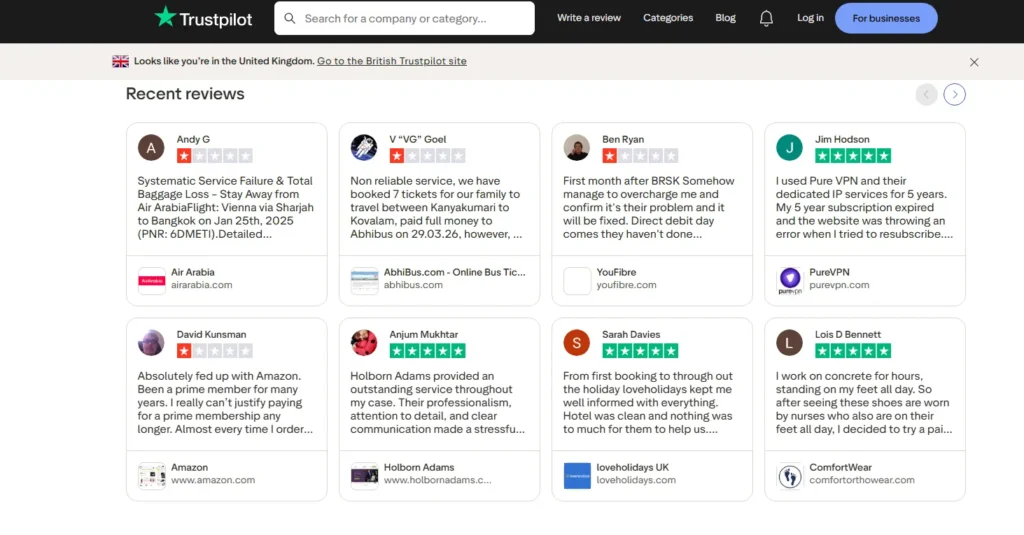
Why do customers trust platforms like Trustpilot? Because of transparency. Trustpilot allows both positive and negative feedback. It is essential to understand the difference between organic reviews (customers who independently seek out Trustpilot to leave feedback) and invited reviews (customers asked directly by the business). While both are valid, a mix of both signals authenticity—showing that the business isn’t afraid to ask for feedback, even if it isn’t always perfect.
Trust is not a soft, fuzzy concept; it is a hard economic driver. The psychology of purchasing is rooted in risk mitigation. When a consumer spends money, their brain is actively looking
for evidence that they are making a safe decision. Reviews reduce the perceived risk of a transaction.
This is where social proof—the psychological phenomenon where people copy the actions of others to reflect correct behavior—comes into play. If 1,000 people have had a great experience at a restaurant or with a software company, a new customer assumes they will too. Studies consistently show that products with visible reviews see conversion rate lifts of 15-30%. For high-ticket items, that lift can be even higher.
Platforms like Trustpilot act as third-party validators. A business can claim “We’re the best” on its own website, but that claim holds little weight. When Trustpilot displays a 4.8-star average based on 2,000 independent reviews, that claim becomes objective truth. This external validation shortens the sales cycle. Instead of spending ten minutes researching a brand, a customer spends two minutes scanning Trustpilot reviews. By placing this trust signal front and center, businesses lower the barrier to entry for new customers and accelerate growth.
You cannot grow using a tool you haven’t set up correctly. The first step to leveraging Trustpilot is claiming your business profile. Even if you haven’t signed up, a profile likely exists. Claim it immediately to prevent impersonation or unmanaged feedback.
Completing your profile: Treat your Trustpilot page as an extension of your website.
Consistency is crucial. A customer clicking from your Instagram to your Trustpilot profile should feel they are in the same place. Inconsistent branding creates cognitive dissonance and reduces trust.
SEO benefits: Many overlook the fact that Trustpilot pages often rank high on Google search results. When someone searches for “[Your Brand Name] reviews,” your Trustpilot page is likely the first result. By optimizing your profile with relevant keywords and a complete description, you control that real estate. Furthermore, Google frequently displays Trustpilot star ratings in organic search snippets, which leads to higher click-through rates. A bare-bones profile signals a business that doesn’t care; a fully optimized profile signals professionalism and invites scrutiny.
A Trustpilot profile with zero reviews is worse than no profile at all—it suggests the business is either new or hiding something. Actively collecting reviews requires a systematic, ethical approach.
Best practices for requesting reviews:
Timing is everything. Request a review while the experience is still fresh but after the value has been delivered. For a hotel, send the invite the morning after checkout. For a meal kit delivery, send it a few hours after the estimated dinner time.
Ethical practices are non-negotiable. Never post fake reviews. Trustpilot’s algorithms are sophisticated at detecting fraudulent patterns (e.g., all reviews coming from the same IP address or using identical phrasing). Do not incentivize positive reviews specifically—you can offer a chance to win a gift card for leaving a review, regardless of star rating, but you pay for five stars in my company. buy now trustpilot reviews.
Leverage automation. Trustpilot offers pre-built automation tools to send invitations at scale. Set up triggers based on order status (e.g., “Delivered” = send invite).
Encourage detailed feedback. Generic “Great!” reviews are fine, but detailed reviews mentioning specific product names or customer service agents are gold for marketing and SEO. Use follow-up questions like, “What did you like most?” to guide the customer.
Collecting reviews is only half the battle. How you respond determines whether you convert skeptics or scare them away.
Responding to positive reviews: Never ignore a compliment. A simple “Thank you, [Name]! We’re thrilled you loved the service” goes a long way. It makes the customer feel seen and shows future readers that you value appreciation. For extra impact, personalize the response by mentioning a specific detail from their review (e.g., “Glad the hiking boots fit perfectly for your Colorado trip”).
Responding to negative reviews: This is where the real growth happens. A negative review is not a crisis; it is a public opportunity to demonstrate your customer service philosophy.
Turning negatives into opportunities: Future customers watch how you handle complaints. If you are empathetic and solution-oriented, they will trust you even more than if you had a perfect 5.0 score (which looks suspiciously filtered). Engaging with reviews builds a reputation for accountability and transparency.
Your Trustpilot reviews are not meant to stay on Trustpilot. They are reusable marketing assets that belong everywhere your customers look.
Website integration: Use Trustpilot’s free widgets to display live review data.
Social media campaigns: Create “Review of the Week” graphics on Instagram or Facebook. Tweet raw, unedited quotes from happy customers. For video content, narrate a customer’s journey based on their Trustpilot review.
Email marketing: Include a “See why others love us” section in your abandoned cart emails. A single 5-star quote can be the nudge that converts a hesitant shopper. For post-purchase emails, invite the review first, then show other glowing reviews as social proof.
Paid ads (Google Shopping, Facebook): While you cannot directly copy-paste reviews into ad copy due to platform policies, you can use Trustpilot’s “Google Customer Reviews” integration to display your star rating in your Google Shopping ads. This significantly boosts click-through rates (CTR).
Building case studies: Don’t just use short quotes. Identify your most detailed, enthusiastic 5-star review. Reach out to that customer, ask for permission to interview them, and turn their feedback into a full case study or video testimonial. This transforms a simple review into high-conversion sales collateral.
Beyond marketing, Trustpilot is a free, continuous focus group. Every review is a data point that reveals your operational weaknesses and hidden strengths.
Analyzing review trends: Export your reviews monthly. Look for patterns. Are three customers in the last month complaining about slow shipping? That’s a logistics issue. Are five customers praising a specific employee? That’s a training model to replicate. Use sentiment analysis tools or simply read through 1-star and 2-star reviews to find the root causes of dissatisfaction.
Identifying common complaints: If multiple customers say your “small” size fits like a “medium,” you need to update your sizing chart. If they say your software crashes on login, your engineering team needs to prioritize a bug fix.
Creating a customer-centric strategy: Share negative feedback with your entire team—not to assign blame, but to foster a culture of continuous improvement. Close the loop by publicly responding to the review once the fix is implemented: “We heard you. As of last week, we’ve updated our shipping carriers.”
By acting on feedback, you don’t just fix problems; you convert critics into loyalists. When a customer sees their complaint led to real change, they often return to update their review to a 4 or 5 star, demonstrating powerful brand accountability.
The relationship between Trustpilot and your search engine ranking is symbiotic. While reviews themselves are not a direct Google ranking factor (Google does not crawl Trustpilot to rank your site), the byproducts of reviews are SEO gold.
How reviews improve visibility:
Even with the best intentions, businesses sabotage their Trustpilot growth. Avoid these pitfalls:
Consider Heights, a supplement brand. They launched with a “radical transparency” strategy, actively pushing every customer to Trustpilot, including those with complaints. By responding publicly to every negative review and fixing formulation issues based on feedback, they grew to over 5,000 reviews and a 4.6-star average. Their conversion rate on product pages featuring Trustpilot widgets was nearly double that of pages without.
Another example: RentOk, a property rental platform. Before Trustpilot, they had no external validation. After integrating automated review invitations and displaying badges on listings, they saw a 15% increase in completed applications. Landlords preferred their platform because the transparency reduced tenant disputes.
Lessons learned: Growth doesn’t come from perfect scores; it comes from the process of collecting, responding to, and acting on feedback. The “before” scenario (zero reviews, no feedback loop) creates stagnation. The “after” scenario (active profile, engaged management) creates a virtuous cycle of trust and sales.
Trust is no longer a differentiator; it is a prerequisite for survival. In a crowded digital marketplace, customers have infinite choices, and they will always default to the business that feels safest. Trustpilot provides the infrastructure for that safety, offering a transparent, third-party platform where credibility is earned through honest feedback.
To grow your business with Trustpilot, you must move beyond passive collection. Optimize your profile like a landing page. Systematically invite feedback after every transaction. Respond to every review with professionalism and grace. Then, take those authentic voices and blast them across your website, emails, and ads. Finally, listen to what the reviews are telling you about your own operations and improve relentlessly.
The businesses that win tomorrow are not necessarily the ones with the best products, but the ones with the most transparent relationships. By embracing Trustpilot as a strategic growth partner—not just a rating box—you signal to the world that you have nothing to hide and everything to prove. Start today. Invite that first review. Your future customers are waiting.